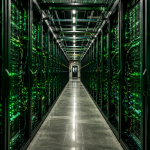
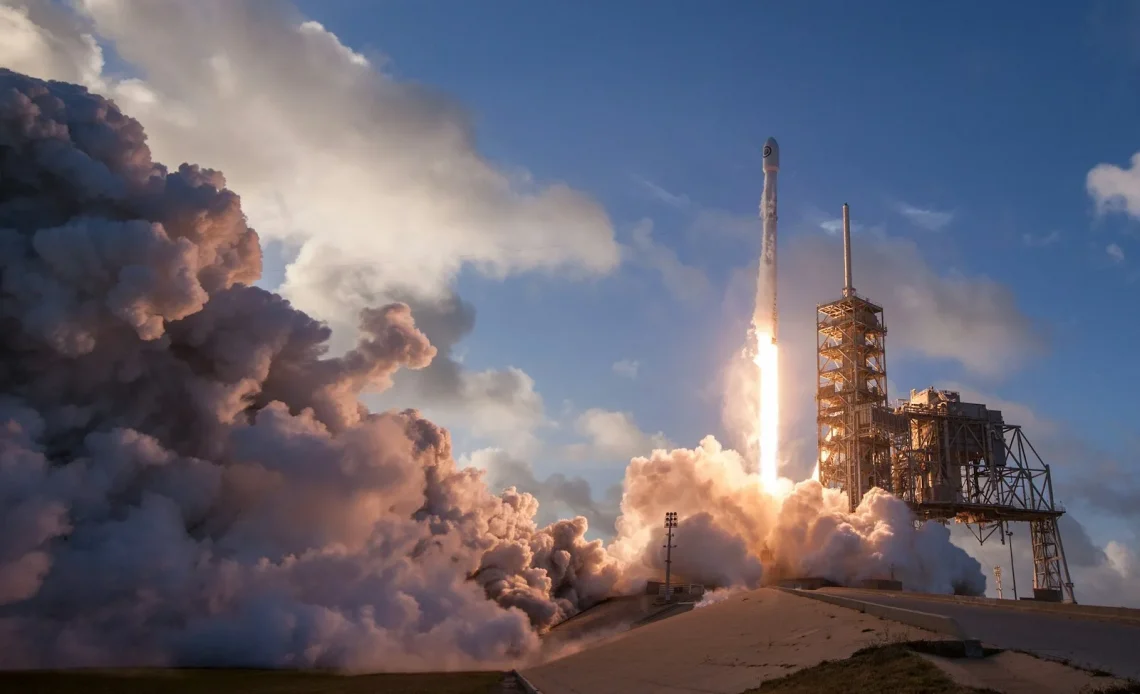
SpaceX plans to begin testing artificial intelligence data centers in space as soon as next year, accelerating one of Elon Musk’s most ambitious infrastructure ideas at a time when AI compute demand is reshaping technology and capital markets. The company is aiming to launch demonstration missions by late 2027, ahead of earlier expectations for tests beginning as soon as 2028, according to reporting based on recent investor presentations.
The planned tests are intended to validate whether AI computing hardware can operate reliably in orbit before any broader commercial rollout. The concept is built around satellites carrying high-performance AI chips, solar power systems and thermal-management equipment, allowing computation to take place above Earth rather than inside conventional data centers. SpaceX has said the initiative could become a major part of its long-term growth strategy, alongside launch services and Starlink satellite broadband.
Musk has argued that orbital AI data centers are technically feasible because they can use many technologies already proven through Starlink, including satellite manufacturing, communications links, solar arrays and orbital operations. The first AI satellite is expected to use Nvidia chips, with compute capacity reportedly comparable to a high-end Nvidia GB300 rack. SpaceX executives have presented the project as a way to address growing constraints in terrestrial AI infrastructure, including power availability, land use, permitting delays and grid pressure.
Orbital compute becomes a new infrastructure thesis
The main attraction of space-based AI infrastructure is energy access. Satellites in orbit can use solar power continuously or for extended periods depending on orbital design, potentially reducing reliance on constrained terrestrial power grids. That is important because AI data centers are becoming major consumers of electricity, with hyperscalers, chipmakers and governments racing to secure power capacity for model training and inference.
SpaceX’s proposal also depends heavily on launch economics. The company’s Starship rocket is central to the strategy because large-scale orbital compute would require launching heavy satellite hardware at costs far below traditional space systems. If Starship achieves high-frequency reuse, SpaceX could lower the cost of deploying and replacing computing satellites. If Starship remains delayed or more expensive than expected, the economics of orbital data centers become harder to justify.
Cooling and radiation are major engineering challenges. AI chips generate substantial heat, and space systems must reject that heat through radiators rather than conventional air or liquid cooling tied to terrestrial infrastructure. Hardware must also withstand radiation, micrometeoroid risk and the operational limits of servicing equipment in orbit. These issues make the first demonstrations critical because they will test whether the concept can move beyond investor presentations into repeatable engineering.
Market implications extend beyond SpaceX
The project could reshape investor expectations for SpaceX by adding AI infrastructure to a business already valued around launch, Starlink and government contracts. If successful, orbital compute would place the company at the intersection of two of the largest investment themes in public and private markets: artificial intelligence and space infrastructure.
The competitive implications are also significant. Terrestrial AI data centers are being built by Microsoft, Amazon, Google, Meta and other hyperscalers, but they face rising power costs, environmental scrutiny and grid bottlenecks. SpaceX is effectively proposing an alternative infrastructure layer that uses its launch and satellite-manufacturing advantages to compete in compute capacity, not only communications.
Regulatory questions remain unresolved. A large orbital AI network would require approvals for spectrum use, orbital slots, collision mitigation, debris management and environmental impact. Reports have indicated that SpaceX has sought approval for a large number of space-based data-center satellites, but any commercial-scale deployment would face extensive review.
For markets, the near-term significance lies in proof of feasibility. A successful 2027 test would not immediately create a commercial orbital cloud business, but it would strengthen SpaceX’s case that AI infrastructure can become a major future revenue stream. Failure or delays would reinforce concerns that the concept remains too capital-intensive and technically uncertain. The tests will therefore be watched not only by space investors, but also by the broader AI infrastructure market.