
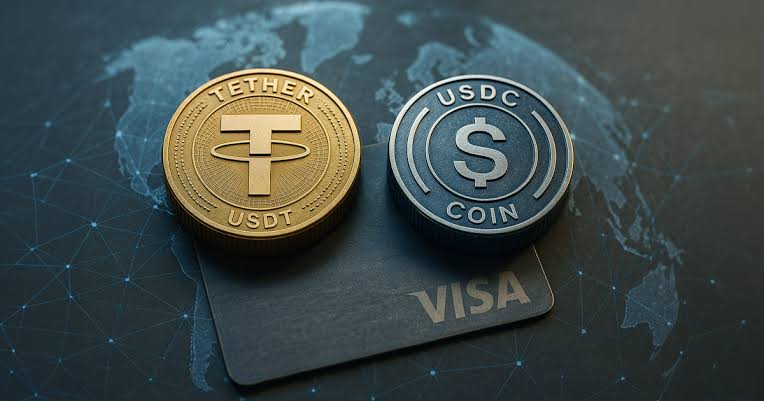
A consortium of major financial and cryptocurrency companies has officially launched Open USD, a new U.S. dollar-backed stablecoin intended to provide an interoperable settlement asset across exchanges, wallets and blockchain-based financial applications.
The launch moves Open USD from development into active circulation, adding another competitor to a stablecoin market currently dominated by Tether’s USDT and Circle’s USDC.
Open USD is designed to maintain a one-to-one value with the U.S. dollar, with reserves backing tokens in circulation rather than relying on an algorithmic mechanism to maintain its peg.
Its backers are positioning the stablecoin as shared financial infrastructure rather than a token built primarily around one exchange or application.
That model is intended to encourage distribution across multiple financial platforms from launch and make the asset usable for payments, trading, transfers and decentralized-finance applications.
Financial Firms Target an Interoperable Dollar
The central proposition behind Open USD is interoperability. Stablecoins have grown into one of the largest applications of public blockchain networks, but liquidity remains concentrated in a small number of issuers and is fragmented across different chains.
A user holding dollar tokens on one network may need to bridge or swap them before interacting with an application operating elsewhere.
Open USD’s backers aim to reduce that fragmentation by building distribution across multiple platforms and blockchain environments, allowing the same dollar-denominated asset to move between different parts of the crypto economy.
The strategy also reflects a broader shift in how financial institutions view stablecoins. Early stablecoins were primarily used as trading instruments on cryptocurrency exchanges, giving traders a dollar-like asset that could move between markets without repeatedly entering the banking system.
Their role has since expanded into cross-border transfers, merchant payments, remittances, tokenized securities and institutional settlement.
Visa, Mastercard and major banks are now experimenting with stablecoin settlement, while payment companies increasingly offer infrastructure allowing businesses to send or receive tokenized dollars.
Open USD is entering that market as competition for stablecoin distribution intensifies.
USDT and USDC Remain the Benchmark
Despite the growing number of entrants, challenging the incumbent stablecoins will require more than issuing another dollar-backed token.
Stablecoins benefit heavily from network effects. USDT and USDC are already integrated across exchanges, wallets, payment applications, decentralized exchanges, lending markets and multiple blockchain networks. That creates deep liquidity and makes both assets easier to use as collateral and settlement instruments.
Open USD will therefore need to build meaningful circulating supply and secondary-market liquidity while expanding the number of platforms that support it.
Reserve transparency will also be important. Users of fiat-backed stablecoins ultimately depend on the quality and liquidity of the assets backing the tokens, alongside the legal mechanisms governing redemption. Regular disclosure of reserve composition and independent attestations have consequently become important competitive factors among major issuers.
Regulation is another increasingly important part of the market. The United States has moved toward a federal framework for payment stablecoins, while the European Union’s MiCA regime already imposes requirements on issuers serving European users. Other major jurisdictions are developing their own rules covering reserves, redemption and licensing.
Open USD’s launch therefore comes as stablecoins increasingly move from a largely crypto-native product toward regulated financial infrastructure. Its consortium structure could help accelerate distribution by giving the token access to established financial and crypto platforms from the outset.
But the launch is only the first test. The more important measurements will be circulating supply, reserve composition, redemption activity, exchange liquidity and actual transaction volume once Open USD begins competing for users.
If its backers can turn their existing distribution networks into sustained adoption, Open USD could add another significant dollar asset to the onchain economy. If not, it will enter a long list of stablecoins that have struggled to overcome the enormous liquidity advantages already accumulated by USDT and USDC.