
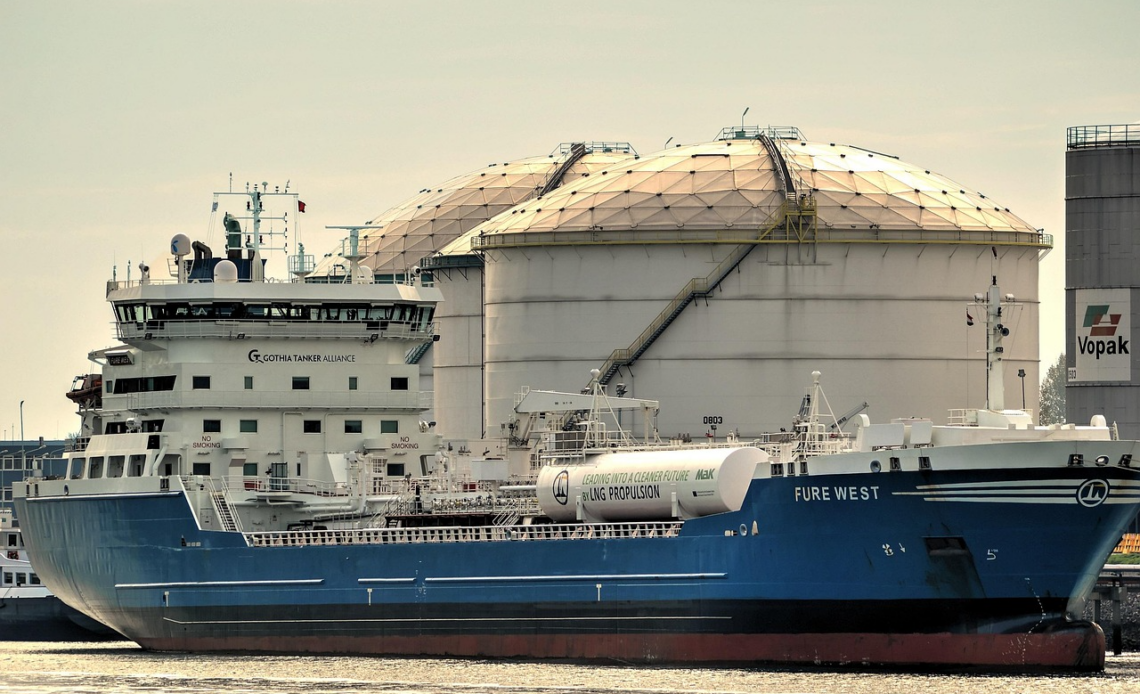
Updated 12 October 2026. Brent crude traded around $104 a barrel on Monday 12 October, after giving up a weekend jump to $105.48. Trading Economics showed Brent near $104 on the day, with an intraday dip toward $103, and Commerzbank noted it fell 1.1 percent below $104 in early Asian trading. The move follows Friday’s $104.72 close. Verdict: the Houthi strikes on Riyadh’s airport and a drone hit on a tanker off Oman keep a risk premium in the price and hold Brent above $100. But they are not adding new barrels lost, and Washington’s “energy ceasefire” and Russian diesel deal are pulling the other way. Reference levels: $96 below, $112 above.
Key facts
- Spot, 12 October: Brent near $104 a barrel (Trading Economics, 12 October), down from $105.48 at 23:04 GMT on Sunday 11 October (France 24). WTI was at $92.44 at that time (France 24).
- Friday close: $104.72, up 0.4 percent on the day and about 2.4 percent on the week (Commerzbank, via FXStreet, 12 October).
- Riyadh airport: Houthi forces struck King Khalid International Airport on Saturday 10 October and again on Sunday 11 October. Bloomberg reported 12 people killed in Saturday’s attack; Gulf News reported 12 dead and more than 300 hurt. Commerzbank counts four attacks on Riyadh’s main airport in a single week.
- Tanker off Oman: UKMTO reported a tanker struck by an uncrewed aerial vehicle near the Sohar anchorage on 11 October and later reclassified the incident as an attack (Arab News; Arab Times). Crew status was still being assessed, and UKMTO has not publicly named who launched the drone.
- The bearish offset: on 11 October President Trump announced an “energy ceasefire” between Russia and Ukraine on Truth Social, two days after saying Russia would release diesel to global markets under a Treasury sanctions easing that runs to 7 April (Time; NBC News). Ukraine’s President Zelensky said the ceasefire “was news for me”.
- Next data point: US September CPI on Wednesday 14 October at 8:30am ET (BLS release calendar).
Why Brent fell on a weekend of attacks
Two Houthi strikes on the capital of the world’s largest crude exporter would normally lift oil. Brent did rise when it reopened on Sunday evening, reaching $105.48 by 23:04 GMT according to France 24. By the Asian morning it had given that back. Commerzbank’s note on Monday said the attacks raise “the risk of a dangerous escalation that could draw in the US”, but the market treated them as a threat rather than an outage.
The reason is in where the strikes landed. An airport is not an oil field, a terminal or a pipeline. Saudi exports were not reported disrupted by the 10 and 11 October attacks. Compare that with September, when Houthi strikes near Yanbu put Saudi export routes directly in play, which we covered in our analysis of the Riyadh and Yanbu strikes.
The other reason is the diesel story. Trading Economics attributed Monday’s slip to expectations that Russian diesel could ease the global fuel shortage, after Trump said Russia would supply more than 4.8 million tons over the coming months. US diesel averaged $6.28 a gallon on 11 October, according to AAA, down from a $6.53 peak on 22 September. If Russian product does reach the market, it takes pressure off refined fuel first and crude second. Our look at whether Russia’s diesel will lower pump prices covers the volumes and the doubts.
The tanker off Sohar matters more than the airport
For the oil price, the drone hit on a tanker near Oman’s Sohar anchorage is the more important of the two weekend events. Sohar sits on the Gulf of Oman, just outside the Strait of Hormuz, on the route most Gulf crude takes to Asia. Rudaw, citing a Washington Institute maritime security assessment, counted at least 17 attacks on tankers in and around the Strait of Hormuz since 28 September.
Each new incident pushes up freight and insurance costs, and a run of them is what turns a risk premium into a supply loss. One hit did not move Brent much on Monday. A second or third in quick succession would be a different signal, and it is the main route to the bull case below.
Brent price: bull, base and bear
| Scenario | Brent | What has to happen | Anchor |
|---|---|---|---|
| Bear | $96 | The energy ceasefire holds, Russian diesel starts moving, the Houthis pause, and a hot CPI print on 14 October lifts the dollar further. | Back to the $97.06 low of 6 October and through the $100 floor Commerzbank says is held up by supply risk. |
| Base | $101-$107 | Attacks continue at the current pace but stay off oil infrastructure; no US strike on Yemen this week. | The last week’s trading range around the $104.72 Friday close; the EIA’s fourth-quarter forecast of about $105. |
| Bull | $112 | The US joins Saudi retaliation against the Houthis, more tankers are hit near Hormuz, or a strike lands on Saudi export infrastructure. | Above the 8 October high of $105.92 and back toward the September average; the EIA put September’s Brent spot average at $114. |
The bear case sits below Monday’s spot near $104, and the bull case needs a real change on the ground, not another headline. Trading Economics’ own model expects Brent at about $108.60 by the end of the quarter. That is a statistical projection, not an analyst call.
What Washington does next
Trading Economics reported on Monday that Trump was considering joining Saudi Arabia in retaliating against the Houthis in Yemen. That is the single biggest swing factor for this week. US strikes would raise the chance of Houthi attacks on shipping in the Red Sea and Gulf of Oman, which is where the bull case lives.
Against that, the White House has already shown it wants lower fuel prices before the 3 November midterms. Trump has said the US will not attack Iran before the vote, while keeping the naval blockade in place. That pledge, and the bets traders placed on it, are covered in our Brent week-ahead outlook. A move against the Houthis would test whether that restraint extends to Yemen.
What to watch this week
- A US decision on Yemen. Any confirmation that US forces will join Saudi strikes is the clearest upside trigger.
- UKMTO notices. Another tanker incident near Hormuz or Sohar would matter more than another strike on Riyadh.
- Russian diesel cargoes. The first confirmed shipments of the 300,000 tons Trump announced would support the bear case.
- Wednesday 14 October, 8:30am ET. US September CPI. A hot print supports the dollar and raises Fed hike talk, which weighs on oil.
- The EIA weekly inventory report later in the week, for the scale of US stock draws.
Quick take: Brent near $104 is pricing the Houthi strikes as a threat, not an outage. The airport attacks keep the price above $100; the energy ceasefire and Russian diesel stop it from running. That points to a $101-$107 week. The route to $112 runs through the shipping lanes and a US decision on Yemen; the route to $96 runs through Moscow and Wednesday’s CPI.
FAQ
What is the Brent crude price today?
Brent traded around $104 a barrel on Monday 12 October 2026, according to Trading Economics, after touching $105.48 late on Sunday. It closed at $104.72 on Friday 9 October.
Why did oil not rise after the Houthi attack on Riyadh?
The strikes hit an airport, not oil infrastructure, so no Saudi exports were reported lost. At the same time, Trump’s Russia-Ukraine “energy ceasefire” and a deal for Russia to release diesel pointed to more fuel supply, which outweighed the risk premium on Monday.
What happened to the tanker off Oman?
UKMTO said a tanker was struck by a drone near the Sohar anchorage on 11 October and reclassified the incident as an attack. Local authorities helped evacuate the crew. UKMTO has not publicly named who launched the drone.
Could Brent fall below $100?
Yes, if the energy ceasefire holds, Russian diesel reaches the market and Houthi attacks ease. Our bear case is $96, just below the 6 October low of $97.06.
What would push Brent to $112?
US military action against the Houthis, further tanker attacks near the Strait of Hormuz, or a strike on Saudi export facilities. Any of these would turn the current risk premium into an actual supply loss.
When is the next big data point for oil?
US September CPI on Wednesday 14 October at 8:30am ET. A strong print would lift the dollar and weigh on oil.
Sources: Trading Economics (Brent price and market commentary, 12 October 2026; end-of-quarter model estimate); Commerzbank via FXStreet (Friday close, weekly change, Monday Asian trading, airport attack count); France 24 (Sunday evening Brent and WTI prices, Riyadh airport attacks); Bloomberg via Bloomingbit and Gulf News (casualty figures); UKMTO via Arab News and Arab Times (Sohar tanker attack); Rudaw citing the Washington Institute (tanker attack count); Time and NBC News (energy ceasefire, Russian diesel deal, sanctions easing); AAA (US diesel prices); EIA October 2026 Short-Term Energy Outlook (fourth-quarter forecast, September average); US Bureau of Labor Statistics release calendar (CPI date).
This article is for information only and is not investment advice. Commodity prices move continuously and the figures above were accurate at the time of writing. Nothing here is a recommendation to buy or sell any instrument. Do your own research and consider your own circumstances before trading.