
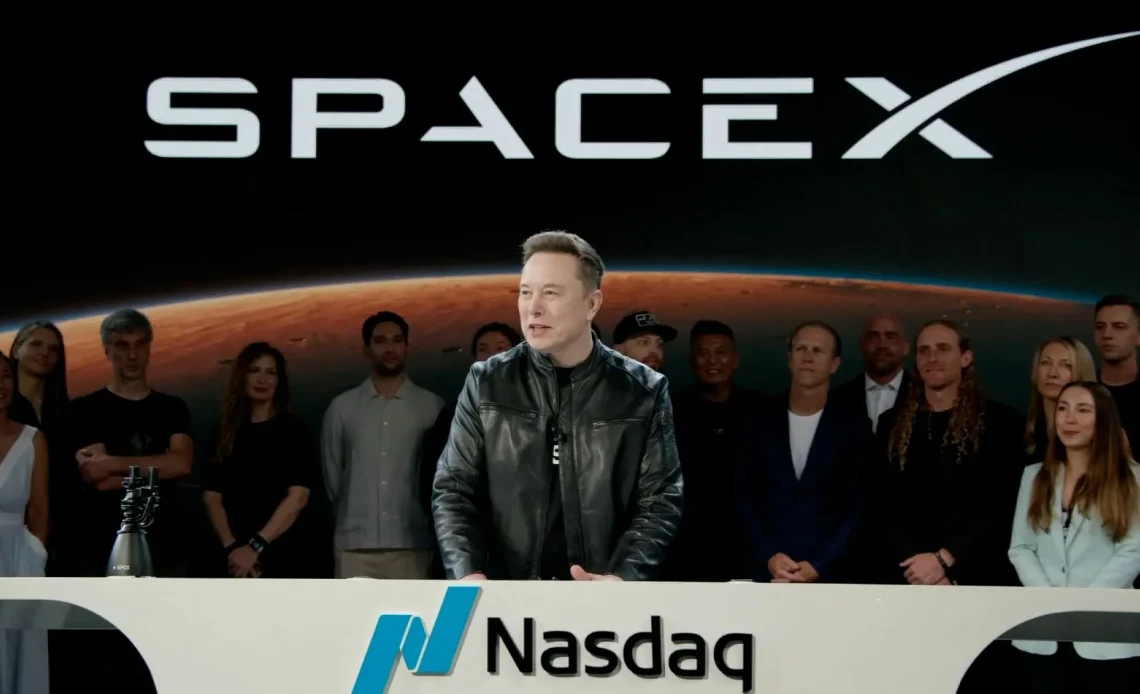
Two months after its blockbuster market debut, SpaceX stock has completed a full round trip. Space Exploration Technologies priced its initial public offering at $135 a share on June 12, raising $75 billion, then watched the stock spike above $225 before sliding all the way below its offer price to around $107 by late July. As of Tuesday it trades near $138.63, back above the $135 it started at, up more than 23% in five sessions.
The recovery has a clear engine. On its first-ever earnings call as a public company, SpaceX beat on revenue and unveiled an audacious new ambition: to build a terrestrial mobile network and become a direct competitor to the largest US wireless carriers. The market’s initial reaction was to sell the enormous spending the plan implies. Over the days since, it has reconsidered, and the stock has recovered the entire drawdown.
SpaceX (SPCX) debuted at $135, ran above $225, then fell below $115 by late July before recovering to near $139 by August 11, reclaiming its IPO price. Source: TradingViewThe Q2 Report That Started the Turn
The SpaceX Q2 report was strong at the top line as revenue came in at $7.8 billion, up 92% year over year and ahead of the roughly $6.93 billion analysts expected, driven overwhelmingly by Starlink, which now accounts for the majority of the company’s revenue. The chief financial officer told investors SpaceX was on pace for $100 billion in annualized recurring revenue by year-end, up from a current run rate near $31 billion, a target that, if credible, reframes the entire valuation.
The catch was the spending. Capital expenditure surged to $18.4 billion in the quarter, from $2.8 billion a year earlier, and it was that figure, not the revenue beat, that dominated the immediate reaction. SpaceX shares fell more than 10% in the session after the report as investors weighed the scale of the outlay against a still-unprofitable bottom line, with an EPS loss of roughly $0.09. The recovery has since been the market deciding that the growth the spending buys is worth it.
The Plan: SpaceX Wants to Be Your Phone Carrier
The catalyst that changed the narrative was the mobile plan. On the earnings call, Musk and President Gwynne Shotwell laid out an intention to move Starlink beyond satellite backup service and build a fully integrated mobile network competing head-on with Verizon, AT&T and T-Mobile in a US wireless market worth roughly $600 billion a year. “We certainly intend to develop the terrestrial component,” Shotwell said, adding that she expects to take “quite a few” customers from AT&T.
SpaceX acquired 65 megahertz of wireless spectrum from EchoStar in deals worth a combined $19.6 billion, giving it the terrestrial rights needed to operate as a real carrier rather than a satellite stopgap. The architecture is a hybrid: Starlink satellites filling coverage gaps in rural areas, paired with small ground-based cells where demand is dense. Shotwell said service would begin at the end of 2027, with the upgraded network potentially 100 times more capable than today’s direct-to-phone offering. Investors took the threat seriously enough that shares of all three incumbent carriers fell when the plan was detailed.
Investor Takeaway
The mobile plan reframes SpaceX from a launch-and-satellite company into a potential $600 billion-market disruptor, which is what re-rated the stock back to its IPO price.
Why the Skeptics Aren’t Sold
The plan is ambitious, and the doubts are legitimate. Building a terrestrial network that competes with carriers in cities, not just dead zones, means replicating infrastructure those carriers spent decades and hundreds of billions of dollars building. T-Mobile CEO Srini Gopalan told the Financial Times the Starlink threat has been “exaggerated,” asking what customer problem a satellite carrier would actually solve, and argued satellites will likely remain complementary to cellular networks rather than replace them.
There is also competition in the satellite-to-phone race itself. AST SpaceMobile, which reported its own quarter the same week, has FCC approval for a 248-satellite constellation and a different technical approach built around large deployable antennas, and Amazon entered the field with an $11 billion Globalstar acquisition. SpaceX’s edge is scale, with more than 650 direct-to-cell satellites already in orbit, but the market it wants to enter is contested, and the 2027 timeline gives rivals room to move.
The Spending Question and the Musk Wealth Effect
The recovery has not silenced the concern that started the sell-off: how SpaceX pays for all of this. The $18.4 billion quarterly capex sits alongside a broader Musk-empire spending surge. Tesla and SpaceX together committed $16.8 billion to a single chip plant, a figure that dwarfs Tesla’s entire annual profit of roughly $3.8 billion, underscoring how much capital the ventures are consuming relative to what they earn. For a company promising a $100 billion revenue run rate, the spending is the bet; for skeptics, it is the risk.
The share-price round trip also matters for Elon Musk’s net worth, since his SpaceX stake is a central pillar of it. The slide below $115 dented that paper wealth, and the recovery to $139 restores it, a reminder that SPCX’s swings move one of the world’s largest fortunes as much as they move a balance sheet. The stock’s reclaiming of its IPO price is, in that sense, a personal milestone for Musk as much as a corporate one.
Retail Sells Into the Strength
One notable signal accompanied the rally: the people who drove it started taking profits. Retail investors net-sold about $4.5 million of SPCX on Friday, the first net selling since the June IPO, even as the shares jumped about 16% intraday. It is a small figure against SpaceX’s size, but the direction is telling: the retail base that piled in at the debut and rode the recovery is beginning to sell into strength as the stock reclaims its starting point.
That fits a broader pattern across space stocks, which had a turbulent week. Rocket Lab, AST SpaceMobile and Archer all reported earnings and fell, even as SpaceX recovered, a divergence that shows the sector trading less as a single block than it did earlier in the summer. SpaceX’s rebound to its IPO price is its own story now, powered by a specific catalyst the others do not share. For how the range of outcomes maps to the share price from here, FinanceFeeds’ SpaceX bull and bear case frames the debate, and the company’s Nvidia partnership on orbital AI data centers adds another growth vector the phone plan sits alongside.
Whether SPCX holds above $135 depends on the same question the sell-off first raised: whether the market keeps valuing the ambition over the spending. For now, it does, and the stock that fell 50% from its post-IPO high is back where it began, carried there by a plan to put a cell tower in space and another in your neighborhood.
Investor Takeaway
The $18.4 billion capex is the key risk to watch, since the entire bull case rests on the market continuing to value SpaceX’s spending as investment rather than cash burn.