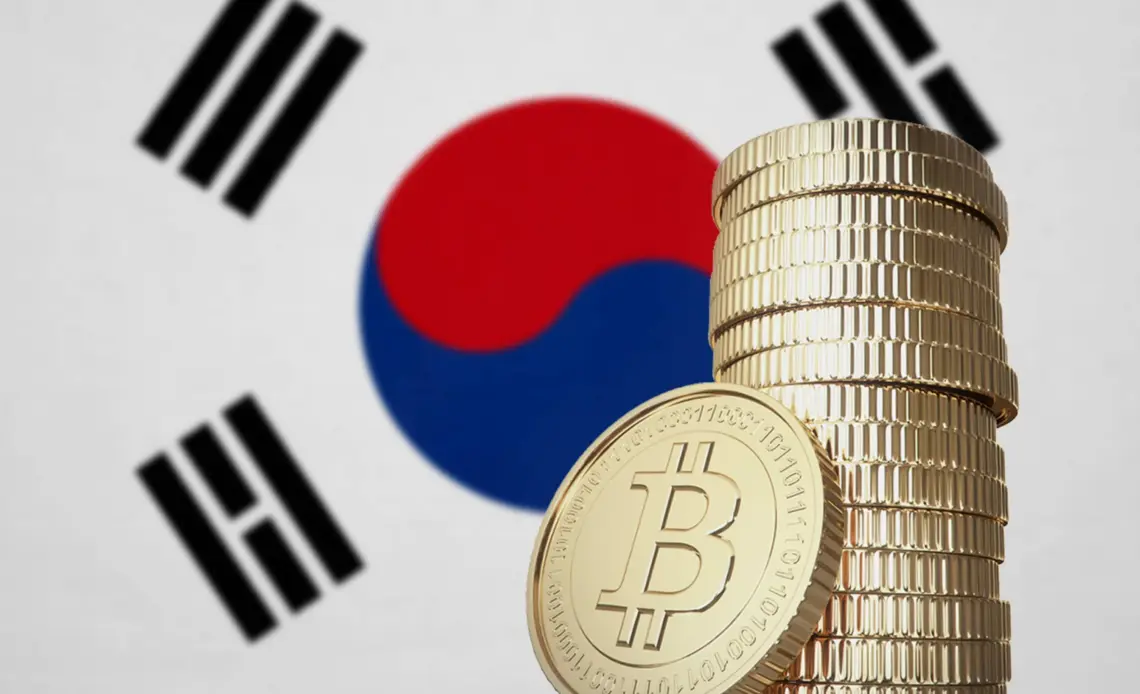
South Korea has emerged as East Asia’s largest cryptocurrency economy, receiving an estimated $449.1 billion in onchain digital-asset value over the 12 months through June 2026, according to new data from Chainalysis.
The figure covers cryptocurrency value received between July 2025 and June 2026 and places South Korea ahead of the region’s other major crypto markets. It should not be interpreted as $449.1 billion of cryptocurrency owned by South Korean investors or as trading volume generated exclusively on domestic exchanges.
Chainalysis measures blockchain activity attributable to countries using transaction and service-location data, producing an estimate of value flowing into crypto services and users associated with each market.
South Korea’s position reflects an unusually active retail trading population, large domestic exchanges and increasing institutional interest in digital assets. The result is particularly notable because the country has a population of roughly 52 million, substantially smaller than several other Asian economies.
South Korea Pulls Ahead in East Asia
Chainalysis’s data show that East Asia remains one of the world’s most important cryptocurrency regions despite substantial differences in regulatory approaches between individual countries.
South Korea accounted for the largest share of regional activity during the measurement period. Domestic exchanges including Upbit and Bithumb have historically generated substantial won-denominated trading volumes, while cryptocurrency ownership has spread widely among Korean retail investors.
The market has also developed characteristics rarely seen at the same scale elsewhere. Korean exchanges periodically price cryptocurrencies differently from global platforms, producing the phenomenon known as the “Kimchi premium.” The spread can widen during periods of intense domestic demand because South Korea’s capital controls and exchange rules make straightforward international arbitrage more difficult.
Stablecoins have become another important policy issue. Dollar-denominated tokens provide Korean users with blockchain-based exposure to foreign currency and international crypto markets, creating questions for policymakers around capital flows and the role of the Korean won in an increasingly tokenized financial system.
South Korea is consequently developing a more comprehensive regulatory framework while simultaneously considering how locally issued won-denominated stablecoins should operate.
Regulation Tightens as Adoption Expands
South Korea’s crypto growth has occurred alongside increasing regulatory oversight rather than deregulation.
The country’s Virtual Asset User Protection Act, which took effect in July 2024, introduced requirements covering customer-asset protection, unfair trading and market surveillance. Authorities have subsequently worked on a second phase of legislation intended to address broader questions including token issuance, exchange operations and stablecoins.
South Korea has also tightened monitoring of market manipulation and other trading practices as digital assets become more integrated into the country’s financial system.
That combination of high adoption and stricter supervision distinguishes the market from jurisdictions that have either prohibited significant crypto activity or allowed it to expand with comparatively limited regulation.
The $449.1 billion figure also illustrates why South Korea matters to global crypto companies. A market generating hundreds of billions of dollars in annual onchain activity can influence exchange liquidity, token listings and demand for major cryptocurrencies despite representing a relatively small share of the world’s population.
However, Chainalysis’s methodology means the number should be interpreted as an estimate of economic activity rather than a conventional national accounting statistic. Blockchain transactions can include transfers between exchanges, institutional movements and other transactions that do not represent consumer purchases or new investment. The same capital can also move multiple times during the measurement period.
The report therefore does not establish that South Koreans invested $449.1 billion of new money into cryptocurrency. What it does demonstrate is the scale of blockchain activity attributable to the country.
With an estimated $449.1 billion received between July 2025 and June 2026, South Korea now sits at the center of East Asia’s crypto economy — combining exceptionally active retail participation, large domestic exchanges and an increasingly consequential regulatory framework.