
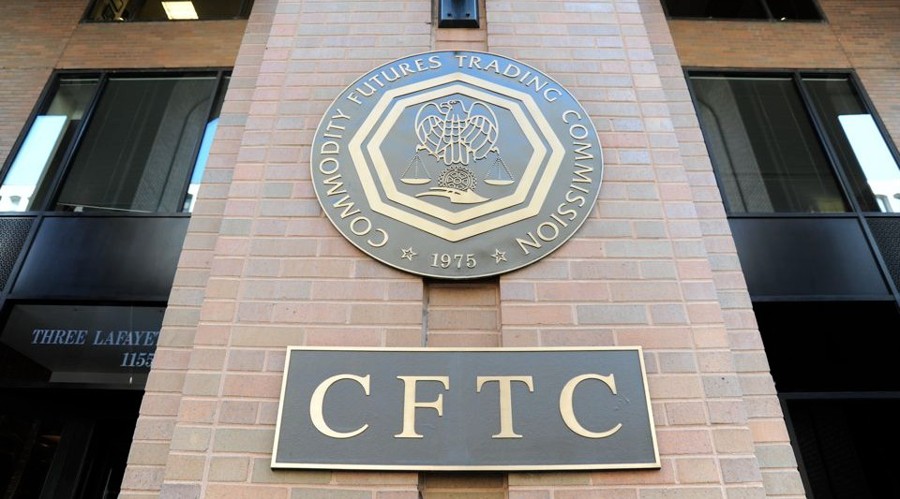
Commodity Futures Trading Commission Chairman Michael Selig has cited Bitcoin, Ether, Solana, Stellar, Tezos and XRP as examples of digital commodities, providing unusually explicit guidance on how the agency views several of the largest blockchain assets.
Selig named BTC, ETH, SOL, XLM, XTZ and XRP while discussing the CFTC‘s role in digital-asset markets and the need for a clearer federal framework governing spot crypto trading.
The statement is significant because regulatory treatment of cryptocurrencies outside Bitcoin has historically been less settled.
Bitcoin has long been treated as a commodity by the CFTC and federal courts, while Ether has also increasingly been described by CFTC officials as falling within the agency’s commodity jurisdiction. Selig’s inclusion of Solana, XRP, Stellar and Tezos provides a broader set of examples.
However, the comments should not be interpreted as Congress formally declaring all six tokens commodities through legislation. They represent the CFTC chairman’s articulation of assets that fit within the digital-commodity category under the agency’s regulatory approach.
XRP and SOL Stand Out From the List
Bitcoin and Ether are the least surprising inclusions. The CFTC has overseen regulated derivatives based on both assets for years, and its enforcement actions have repeatedly described them as commodities under the Commodity Exchange Act.
The inclusion of XRP and Solana carries greater regulatory significance because both have previously been central to disputes over when crypto assets fall under U.S. securities law.
The Securities and Exchange Commission sued Ripple in December 2020, alleging that XRP sales constituted unregistered securities offerings. A federal court later distinguished between different types of XRP transactions rather than finding that XRP itself was inherently a security in every circumstance. The litigation ultimately produced one of the most influential judicial precedents in U.S. crypto regulation.
Solana also appeared in earlier SEC enforcement complaints as an asset the regulator alleged was offered and sold as a security.
Selig’s decision to cite SOL as a digital commodity therefore demonstrates how the federal regulatory environment has shifted as Washington develops a clearer division between securities and commodities.
XLM and XTZ are similarly notable because neither has historically received the same level of regulatory attention as Bitcoin or Ether.
Classification Could Shape Market-Structure Rules
The distinction matters because commodities and securities fall under substantially different U.S. regulatory frameworks.
The SEC oversees securities markets, while the CFTC regulates derivatives on commodities and currently has anti-fraud and anti-manipulation authority over commodity spot markets. What the CFTC does not yet possess is the same comprehensive regulatory authority over spot digital-commodity exchanges that it has over futures markets.
Congressional market-structure legislation seeks to address that gap. Proposed legislation would establish clearer rules determining when digital assets fall under SEC jurisdiction and when sufficiently decentralized blockchain assets qualify for CFTC-supervised commodity markets.
Selig has repeatedly argued that the CFTC should have authority to oversee spot digital-commodity trading, giving exchanges a federal registration framework rather than relying on the current mixture of state money-transmitter rules and federal enforcement authorities.
His latest list consequently has implications beyond terminology. If BTC, ETH, SOL, XLM, XTZ and XRP are treated as digital commodities under a future market-structure framework, trading venues offering those assets could increasingly fall within CFTC-led supervision rather than securities-exchange regulation.
That does not eliminate other legal obligations. Transactions involving a commodity can still constitute securities transactions depending on how an investment arrangement is structured, and crypto exchanges remain subject to anti-money-laundering, sanctions and other financial rules.
The chairman’s remarks nevertheless provide one of the clearest recent signals about the CFTC’s view of major cryptocurrencies beyond Bitcoin and Ether.
Rather than limiting the digital-commodity category to the two largest assets, Selig explicitly identified six blockchain tokens spanning payments, smart-contract platforms and proof-of-stake networks.
The immediate significance is therefore regulatory rather than technological: the head of the CFTC is publicly placing BTC, ETH, SOL, XLM, XTZ and XRP inside the digital-commodity conversation as Congress considers giving his agency substantially greater authority over U.S. crypto spot markets.