Gold enters Wednesday’s release of the July Federal Open Market Committee minutes with a September interest-rate increase still priced as a material risk. The Federal Reserve’s August calendar schedules the minutes for August 19 at 2:00 p.m. ET, three weeks after policymakers voted 9-3 to hold rates.
Spot gold traded at $4,359.58 an ounce at 7:37 a.m. GMT on August 19, while US gold futures were at $4,413.40, according to Reuters market data. The $4,414 figure is therefore a futures price, not the spot quote.
Gold Has Priced Softer Data, But Not A Dovish Fed
Gold rose about 0.6 percent early Wednesday after falling almost 2 percent as a global bond selloff lifted long-term yields. Softer US employment and inflation data have reduced hike expectations, but elevated yields raise the opportunity cost of holding an asset that pays no income.
The move follows a volatile month in which gold reached $4,414 before the July inflation report without receiving a definitive rate signal. The current gold forecast range remains wide because lower real yields support bullion, while renewed tightening would pressure it through yields and the dollar.
September Markets Favor A Hold, Not A Hike
Polymarket’s September market priced a 72 percent chance of no change and about 28 percent for a quarter-point increase on August 19. A quarter-point cut stood near 1 percent, while moves of 50 basis points or more in either direction were below 1 percent. The market is no longer built around the early-2026 assumption that the Fed’s next action must be a cut, but it is not predicting a hike as the most likely September result.
An August 19 sweep of 24-hour activity recorded $625,046 for a quarter-point increase, $393,213 for a quarter-point decrease, $370,477 for no change and $349,356 for an increase of at least 50 basis points. The figures measure turnover, not probability or open interest. Greater hike volume shows where traders were most active, not which result they considered most likely.
CME FedWatch provided a separate reading of about 67 percent for a hold and 33 percent for a hike on August 19. CME derives probabilities from federal funds futures, while Polymarket prices event contracts, so each figure must retain its own methodology. The gap has persisted since July CPI failed to settle the September debate.
The July Vote Put Three Officials In The Hike Camp
The July policy statement kept the target range at 3.50 percent to 3.75 percent by a 9-3 vote. Beth Hammack, Neel Kashkari and Lorie Logan dissented because they preferred a quarter-point increase. That was more consequential for gold than an ordinary hold because it established an identified bloc willing to tighten before the September meeting.
It was the first time since September 2016 that three Fed officials dissented in the same direction. The committee said activity was expanding at a solid pace and inflation remained above target. The split became harder to dismiss when US manufacturing reached a four-year high, but July employment weakened the case for immediate tightening.
July CPI Reduced The Pressure To Tighten
The Bureau of Labor Statistics reported on August 12 that headline consumer prices rose 0.1 percent in July and 3.4 percent from a year earlier. Core CPI increased 0.2 percent during the month and 2.5 percent annually. Both yearly rates eased from June, while energy prices fell 1.5 percent during July.
The report did not eliminate hike risk because inflation remains above target and energy was still 14.7 percent more expensive than a year earlier. It made urgency harder to justify after the July jobs report triggered a large rate repricing. Both reports arrived after the July 28-29 meeting, meaning the committee being minuted had seen neither when it voted.
What Would Confirm A Hike Bias
The hawkish signal would be evidence that support for an increase extended beyond the three dissenters. Other participants favoring a near-term hike, concern about inflation expectations or a judgment that financial conditions remained too loose would suggest the 9-3 division understated the tightening bias.
A weaker signal would show most officials viewing the inflation shock as temporary, prioritizing employment risks or awaiting more data. The meeting preceded the soft July employment and CPI reports, so the minutes cannot reveal how every official views September today.
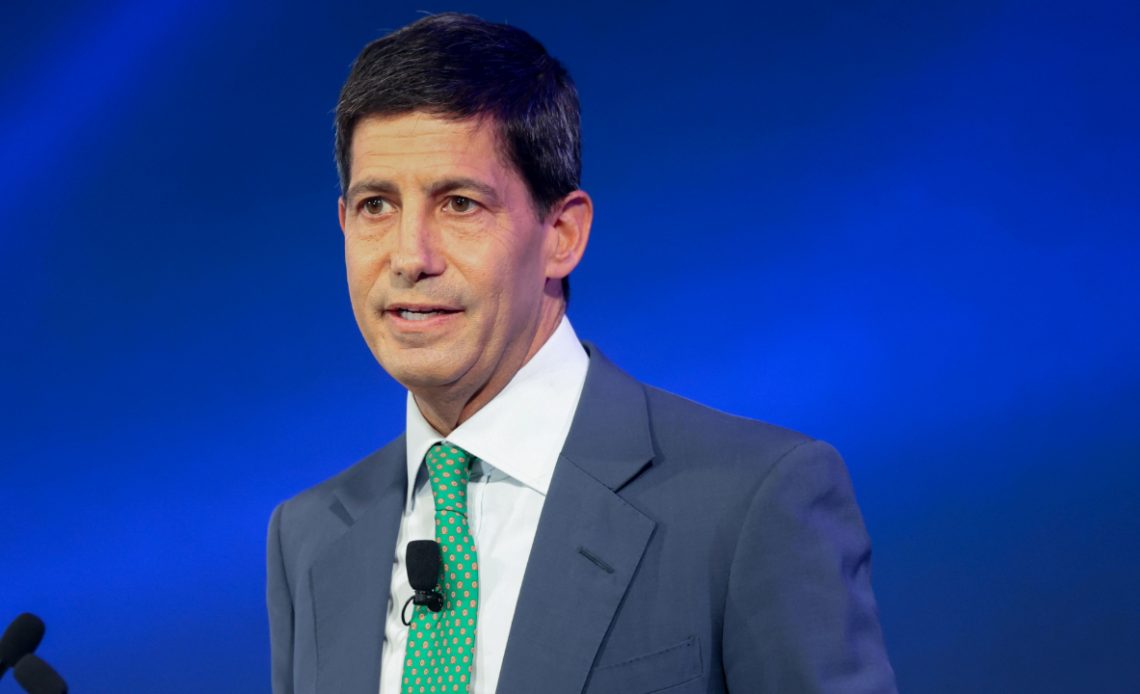
Chair Kevin Warsh welcomed the split publicly after the vote. In the July 29 press conference, he said, “I asked for a good family fight, and I got one,” and described the period as “watchful thinking, not watchful waiting.” He also acknowledged that officials could reach different conclusions from the same discussion. The minutes can now show how many participants were leaning toward the dissenters.
The Levels That Would Break The Setup
The immediate range is defined by $4,390 above and $4,300 below. Lukman Otunuga, Head of Market Research, FXTM, said a sustained break above $4,390 could open $4,505, while a break below $4,300 could expose $4,200 and $4,150. These provide clear invalidation levels for the minutes reaction.
A hawkish release with rising yields and a firmer dollar would pressure $4,300. Evidence that the three dissenters were isolated would make $4,390 the first test. The decisive signal is whether the committee was moving toward the dissenters or containing them.