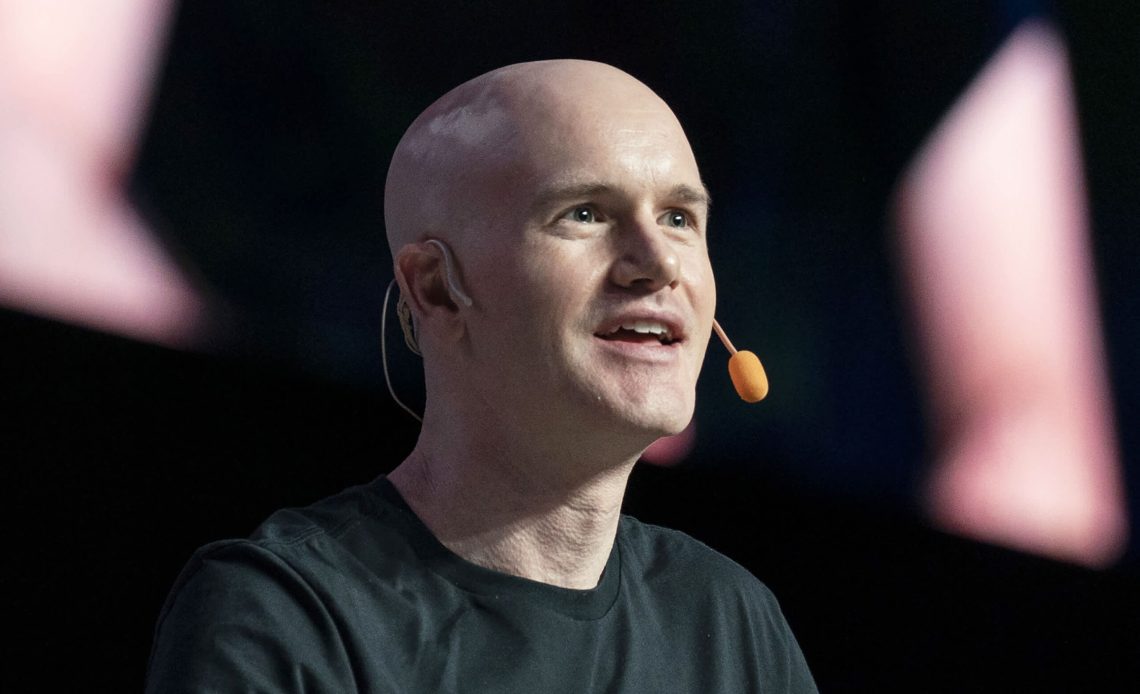
Coinbase Chief Executive Brian Armstrong has said the company remains open to additional acquisitions after its $2.9 billion Deribit deal, signaling that the largest publicly traded U.S. crypto exchange is prepared to use its balance sheet and public-market position to accelerate growth.
Speaking on Bloomberg Television, Armstrong said Coinbase is “always looking” at merger and acquisition opportunities, while emphasizing that the company would remain selective. He said Coinbase has a large balance sheet that can be put to use and noted that being a public company gives it a liquid currency for dealmaking. The comments came after Coinbase agreed to buy Deribit, one of the world’s largest crypto derivatives exchanges, in a transaction announced in May 2025 and later completed in August 2025.
The Deribit acquisition was valued at approximately $2.9 billion when announced, consisting of $700 million in cash and about 11 million shares of Coinbase Class A common stock, subject to customary adjustments. The deal gave Coinbase a major position in global crypto options, a market where Deribit had been the dominant venue for Bitcoin and Ether options trading.
By the time the transaction closed, Coinbase said Deribit had posted July 2025 trading volumes above $185 billion and approximately $60 billion in open interest. The acquisition made Coinbase a broader global derivatives platform, combining spot trading, futures and options under one corporate structure.
Derivatives Become Coinbase’s Expansion Priority
Armstrong’s comments show that Coinbase sees acquisitions as a strategic tool rather than a one-off response to market opportunity. The company has increasingly positioned itself as an “everything exchange” for digital assets, expanding beyond spot crypto trading into derivatives, payments, custody, staking, stablecoins and tokenized assets.
Deribit fits that strategy because derivatives have become one of the largest and most profitable segments of crypto market structure. Options trading is particularly important for institutional investors, market makers and professional traders seeking hedging, volatility exposure and structured strategies. For Coinbase, adding Deribit strengthens its ability to compete with offshore exchanges that have historically dominated global crypto derivatives volume.
The deal also reflects a broader post-2024 shift in crypto mergers and acquisitions. Stronger digital asset prices, improved regulatory sentiment in the United States and rising institutional participation have encouraged larger companies to buy infrastructure, licenses and product capabilities rather than build everything internally.
Coinbase’s public listing gives it a funding advantage over many private crypto competitors. Stock-based transactions allow the company to pursue large acquisitions without relying entirely on cash, although they can also create shareholder dilution and expose deal value to equity-market volatility.
Regulatory and Integration Risks Remain
The company’s acquisition strategy still carries risks. Derivatives markets are more complex than spot trading and face greater regulatory scrutiny, particularly when products are offered across multiple jurisdictions. Coinbase must integrate Deribit’s international operations while managing differences in regulatory treatment between U.S. and non-U.S. crypto derivatives markets.
Armstrong has indicated that international opportunities remain a focus, especially companies that can accelerate product development and business growth. That approach could lead Coinbase toward targets in derivatives, payments, tokenization, custody or infrastructure, where acquisitions can expand the platform faster than organic development.
The regulatory implications are significant. As Coinbase grows through acquisition, it is likely to face closer attention from regulators assessing market concentration, customer protection, derivatives risk management and cross-border compliance. The company’s ability to absorb acquired platforms while maintaining compliance standards will be central to whether its M&A strategy strengthens or complicates its long-term position.
For investors, Armstrong’s remarks suggest Coinbase is preparing for a more aggressive phase of consolidation in digital assets. The Deribit deal established the company as a major derivatives player. Future acquisitions could determine whether Coinbase becomes a full-service global crypto financial platform or remains primarily a U.S.-anchored exchange adapting to a rapidly consolidating market.